Language Reviewer: Nouns
September 3, 2014 From the Teacher, Grade 4, Grade 5 Lessons, Grade 6, Homeschoolers No More, Language Arts, Reviewers No CommentsLanguage Arts Reviewer: NOUNS

Language Arts Reviewer: NOUNS
The youngest child (younger daughter) chose to make a comic strip (among five other tasks) for their English project for The Hundred Dresses book. We started conceptualizing and making sketches for the comic strip but she was a bit reluctant to finish. The hubby suggested that she use digital art drawing using MS Paint instead.
She finished the comic strip faster than the actual hand-drawn illustration.
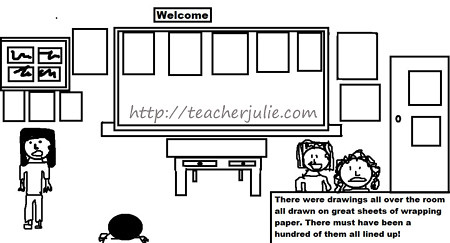
Here is the first part of her comic strip, from the chapter “The Hundred Dresses” from the book with the same title, authored by Eleanor Estes. The book was written in 1944.
The Hundred Dresses is a sad, sad story, according to my daughter. It is, because ti was about bullying and being judged and being made fun of.
Homeschooling does not just mean that the learning takes place within the confines of one’s home. Homeschooling means having the option to choose from among the many learning enrichment centers that provide more skills and new things to learn for homeschoolers.
When my children were still homeschooling, I considered daily tasks as avenues for learning: Science and Math concepts at the supermarket; scheduling and time management for the day to day activities; practical life skills (plus home-making skills) with the household chores; good moral and right conduct with how we deal with the people we encounter throughout the day; honing creativity and imagination through arts and crafts. The list of possibilities and opportunities to learn are endless, if only parents are resourceful and have the “energy” to pursue extra-curricular activities.
I’ve recently been introduced to a not-so-new concept of teaching children academic concepts in an enriching manner, through NumberWorks’nWords, an international learning center for Math and English. What I meant by not-so-new is that I also do the process NumberWorks’Words do with the students: assess, make a program and do a progress report.
What sets the centers apart from the usual tutorial centers is that there are individualized programs for Math and Reading available in NumberWorks’nWords. The centers have evolving learning computer software that they have been developing for years to meet the students learning needs. These learning modules have been developed by educators and software engineers.
Professor Dan Handy, the Managing Director of NumberWorks’nWords explained that their centers want the children to love learning through their programs. The Math Programs are being continually developed by experts while the English programs are geared toward reading, comprehension, writing, spelling and grammar.
NumberWorks’nWords provide assessment process to be able to create individualized programs for the children enrolled with them. They also provide progress reports. All these in an atmosphere where learning is enjoyable.
Here are some fun games for your children to try while they are learning: Games from Number Works’nWords
__________________________________________________________________
For inquiries, these are the NumberWorks’nWords in the Philippines:
Email taguig@numberworks.com
Decoding is the ability to translate written language (units of sounds and/or phonetics = letters symbolizing sounds and words) as spoken words.
Decoding is the ability to put together letters to form words like C-A-T being read as “cat”
Decoding is a very important skill in developing the reading skills of children.
How to start decoding?
Start with familiar names and brands that are used on a daily basis and you are starting in the right direction. So better start “reading” those labels like street signs, consumer products, brand names (be careful with these though for the child might get used to reading expensive brand names, LOL)
Don’t forget to have the children “read” their names too, even if they can’t write it yet 🙂
Grade 2 English – Antonyms
Antonyms are words with the opposite meaning.
For example:
Happy – sad
Big- small
Grade 2 Reviewer for English – Antonyms
Match the antonyms by writing a line from column A to column B:
A B
more here->Grade 2 English.Antonyms
Write the telling sentences correctly:
1. mira is a girl
Underline the correct word to make a good asking question:
1. (Where, When) did Mrs. Chan go?
Change the telling sentences to asking sentences:
1. My favorite toys are cars.
Write the exclamation point (!) what these people said:
1. Oh my gosh
What command sentences are you going to say for these situations:
1. Your dog is eating your shoes.
Click here to view the Grade 1 Language Arts reviewer for Kinds of Sentences
Grade 1 Language Arts Reviewer for SUBJECT and PREDICATE
Write the correct subject for the sentences.
1. ______________ is a dog.
Write the correct predicate for the sentences:
1. The mall _________________________.
Ring the subject and underline the predicate.
1. Dorothy can read books.
Click here to view the Grade 1 Language Arts Reviewer for Subject and Predicate
Can’t view the file? You need Adobe Reader.
